

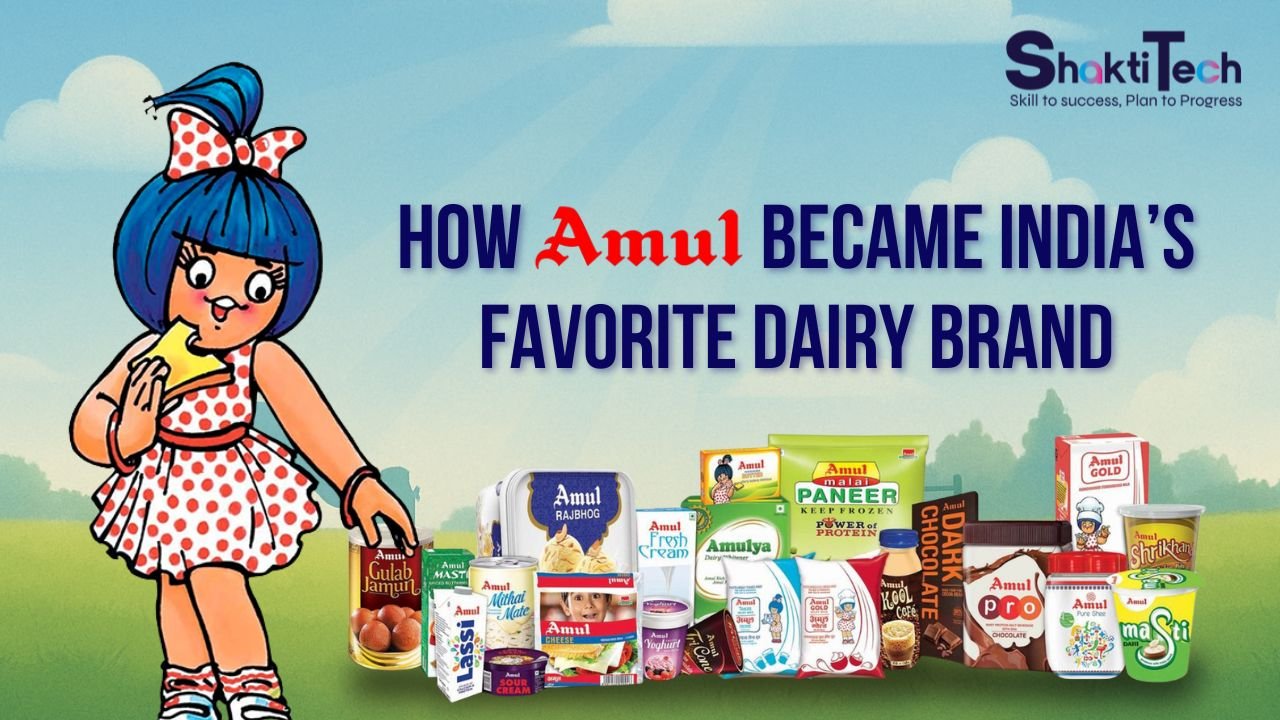
Imagine a small Gujarati village called Anand, where farmers used to fight for a reasonable price for their milk. They decided to take matters into their own hands because they were fed up with being ignored by large middlemen.
This drive resulted in the creation of Amul, a company that would go on to revolutionize the dairy sector in India and win over people’s hearts across the country.
Today, Amul is much more than a dairy company. It’s a part of everyday Indian life, famous not only for its quality products but also for its witty ads, relatable personality, and prices that reflect its farmers’ cooperative roots.
Amul’s story is proof that with passion and smart marketing, a brand can become a trusted friend for generations, weaving itself into the fabric of culture and tradition.
Table of Contents
1. The Birth of Amul—From Anand’s Dairy Farmers to India’s Dairy Giant
Amul’s journey started in 1946 in Anand, Gujarat, where local farmers faced exploitation by middlemen who controlled milk prices unfairly.
Fed up with this, farmers united to form a cooperative, aiming to take control of milk production, processing, and sales themselves.
Key points about Amul’s origin:
- With only two village societies, the Kaira District Co-operative Milk Producers’ Union Ltd. was established.
- Initially collecting just 247 liters of milk per day, it currently gathers over 23 million liters daily.
- Under the direction of Tribhuvandas Patel and then Dr. Verghese Kurien, whose foresight enabled the cooperative to grow

- Contributed significantly to India’s White Revolution, which made the country the world’s largest milk producer.
- Focuses on empowering farmers via democratic management and cooperative ownership.
2. The Farmer’s Win—How Amul Puts Money Back In Their Hands?
Amul is special because it’s owned by the farmers themselves. Instead of having middlemen take a big share, Amul makes sure farmers get paid fairly and quickly for the milk they produce.
How Amul’s cooperative model works:
- Farmers from villages come together to form local milk societies.
- These societies send milk to district unions where it gets processed.
- The state federation sells processed milk and dairy products under the Amul brand.
- Money earned from sales goes back to the farmers, not outside investors.
- Every farmer has an equal say, no matter how much milk they contribute.
This setup helps farmers earn a steady income and feel valued, which changes their lives for the better.
3. More Than Butter—Amul’s Delicious Range of Dairy Treats
Whenever we think of Amul, butter comes to mind first. But inside any grocery store, we can see how Amul has expanded.
Imagine starting your day with Amul milk, adding cheesy happiness to your lunch, and ending the day with creamy Amul ice cream for dessert—all from the same trusted brand.
Did You Know?
- Amul offers over 50 different dairy products across India.
- Their range includes milk, cheese, paneer, curd, yogurt, ghee, milk powders, and ice cream.
- Amul cheese is even used by top pizza chains for its stretch and taste.
- The brand is famous for experimenting with new flavors, like chocolate cheese and low-fat treats.
- Amul ice cream is available in classic, fruit, and premium varieties.
Amul’s continuous creativity with its products means there’s a treat for every taste and occasion, making the brand one step closer to people’s hearts.
4. From Farm to Fridge—The Journey of Fresh Amul Milk
Imagine the daily hustle of thousands of farmers waking up early just to deliver fresh milk. That’s the start of Amul’s incredible supply chain story, which connects rural India to every person, and that’s the purity and love of Amul.
| Step | What Happens |
|---|---|
| Village Milk Collection | Farmers bring fresh milk to their local milk cooperatives on foot, by bike, or by walking. |
| Transport to Union | Special refrigerated trucks pick up milk from village cooperatives and deliver it to processing plants. |
| Processing & Packaging | Milk is pasteurized, tested, and packed using modern automated plants with strict quality control. |
| Cold Storage & Warehousing | Products are stored in cold storage warehouses to maintain freshness before distribution. |
| Distribution Network | Cold chain trucks deliver Amul products to wholesale dealers and retailers nationwide. |
| Final Delivery | Retailers stock the products, making them available to consumers every day. |
5. How Amul Became India’s Favorite Dairy Brand?
What makes Amul a lovable brand across India? Why do families trust this brand for their daily dairy needs?
The answer lies in a powerful mix of factors that work together to create strong loyalty and love for the brand.
- First and foremost, its quality is at the heart of Amul’s success. Consumers know that each product, whether it is butter, milk, or cheese, is totally pure, so they can blindly trust what they’re buying.
This trust has made Amul a go-to brand for millions of households. - Affordability comes next. Amul is a brand that is truly for all Indians because it makes sure that its products are available to everyone, regardless of income levels.
- Amul’s well-known slogan, “The Taste of India,” expresses more than just taste; it also conveys sentimentality and cultural pride.
People are deeply moved by this emotional connection, which integrates the brand into both their everyday lives and special occasions.
Furthermore, Amul’s extensive reach—from big cities to isolated villages—means that customers can locate and depend on the brand with ease wherever they reside.
An effective supply chain that preserves freshness and quality, constant product innovation and diversification into markets like ice cream, cheese, and chocolates, and recognizable advertising campaigns like the enduring Amul Girl commercials are additional pillars of Amul’s success.
Most significantly, Amul’s distinctive cooperative business model empowers millions of farmers, enabling customers to purchase with confidence and pride while bolstering rural livelihoods.
Together, these elements have influenced Amul’s development from a tiny neighborhood cooperative to the most adored dairy brand in India, which is trusted in homes all over the nation.
6. Amul’s Wide Range of Products
Amul is not just about butter. Millions of people use its diverse range of dairy products on a daily basis.
- Milk: Pasteurized milk in different types like full cream, toned, and flavored.
- Butter: Amul Butter is famous for its rich taste and is a kitchen staple.
- Cheese & Paneer: Used widely in Indian cooking, available in multiple varieties.
- Ice Creams: Amul’s ice creams come in many flavors and are loved by all ages.
- Ghee: Traditional clarified butter used in cooking and religious ceremonies.
- Other products: Fresh cream, yogurt, milk powders, chocolates, and health drinks like Amul Protein.
Amul keeps innovating to match changing tastes and health trends, making sure there’s always something new for everyone.
7. Amul’s Smart and Creative Marketing
Amul’s marketing is one of the biggest reasons for its success. The brand is famous for:
- Amul’s marketing is one of the biggest reasons for its success. The brand is famous for:
- Moment Marketing: Amul quickly creates ads about news, movies, or sports events to stay relevant and grab attention instantly.
- Affordable Quality: Amul offers good products at low prices, so everyone can enjoy them.
- Simple, Catchy Taglines: Like “Utterly Butterly Delicious” and “The Taste of India,” which everyone remembers.
- One Strong Brand: Amul sells all products under one name, so customers trust every new item.
- Digital Presence: Amul is active on social media, sharing creative content and engaging with customers online.
- Customer Connection: Amul uses emotional and cultural messages that make people feel proud and connected to the brand.
8. Amul’s Market Leadership and Growth
Amul is the market leader in India’s dairy industry. It holds about 40% of the organized packaged milk market and dominates the butter market with an 85% share. Amul also has a strong presence in cheese, ice cream, and other dairy products.
The brand reaches over 1 million retail outlets across India and exports products to more than 50 countries worldwide.
Behind this success is Amul’s cooperative model, which supports over 3.6 million dairy farmers in thousands of villages. This model has helped India become the world’s largest milk producer.
Amul’s wide product range, trusted quality, and strong marketing continue to fuel its growth, making it a $7 billion brand growing at 17% annually.
9. Amul’s Brand Value and Global Recognition
Amul is the most valuable food brand in India, with a brand value of $4.1 billion in 2025.
It is one of the most powerful brands in India and comes in at number 14 on the list of global food brands.
Amul’s solid financial results, dependable quality, and strong emotional bond with customers are the main factors contributing to its success.
In order to reach the Indian diaspora and mainstream consumers who value genuine Indian dairy products, the brand has also grown internationally, entering markets like the US.
10. Staying Strong—How Amul Tackles Challenges Ahead
Amul has faced many challenges but keeps growing stronger by adapting smartly. Rising competition from private brands pushes Amul to constantly innovate and improve.
New trends like plant-based milk alternatives mean Amul is working hard to create new health-focused and vegan products.
The cooperative structure empowers farmers but can slow quick decisions, so Amul is modernizing operations and embracing digital tools.
Climate changes affect milk supply, so Amul is using smart farming techniques and technology to support sustainable production.
E-commerce and home delivery are new focus areas, helping Amul reach busy urban consumers. Expanding export markets also opens new opportunities to grow globally.
Key points:
- Innovating product range (protein-rich, vegan options)
- Digital transformation in supply and marketing
- Embracing e-commerce and fast delivery
- Supporting farmers with technology and training
- Growing exports to global markets
Amul’s success shows that balancing tradition and innovation is key in today’s fast-changing market.
What We Can Learn From Amul’s Journey?
Amul’s success is proof of the long-lasting effects that can be attained through embracing innovation, providing high-quality products, and empowering local communities.
Amul guaranteed equity and consistent growth by granting farmers ownership. Trust was established through consistent quality, and brand popularity was maintained through innovative marketing and product expansion.
Amul is a prime example of how maintaining roots while remaining flexible is essential for long-term success by fusing conventional wisdom with cutting-edge tactics.
Above all, it strikes an emotional chord and permeates culture and daily life.
To sum up, Amul teaches companies that innovation, real connections, and a community-focused strategy are necessary for sustainable growth.
Leave a Reply