
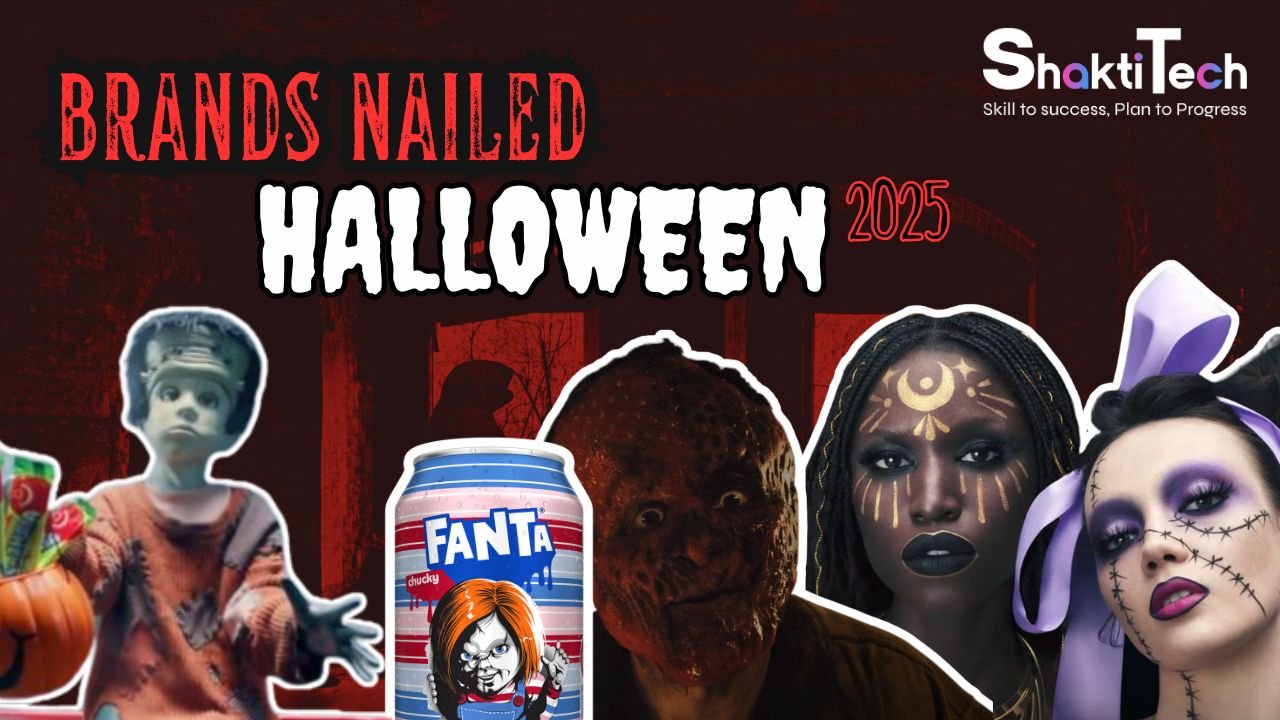
Each October, businesses the world over swap their traditional designs for more audacious, sinister, and dark designs. Halloween has become a marketer’s dream, where creativity wears its own costume and fear meets fun.
The 2025 Halloween campaigns showed us that marketing magic happens when brands stop selling and start telling stories (haunted burger partnerships and lamps to ward off shadows through storytelling).
This season, brands did more than just tap into the Halloween craze to make viewers gasp, laugh, and “share” their content; they tapped into cultural touchpoints, evoked nostalgia, and created quite the experience.
This Halloween, let’s look back at some of the most awesome campaigns that gave creativity a scary spin.
Top Halloween Campaigns of 2025:
1. Fanta x Chucky—A Killer Collab That Brought Nostalgia Back to Life
When Fanta chose to embrace Halloween this year, it didn’t merely add bats and cobwebs to its packaging—it revived a legend.
Yes, we’re referring to Chucky, the most sinister doll in all of history.
Fanta’s international Halloween collaboration didn’t simply pull off a traditional seasonal stunt. It became a reference point in pop culture, connecting Gen Z’s embrace of nostalgic horror, collectibles, and the beautiful chaos of life.
The horrifying twist:
Fanta released limited-edition Chucky cans and bottles wrapped in eerily funny artwork. These were valuable items for collectors, not just drinks. When they were first released in some countries in September and October, fans snatched them up like Halloween candy, and they soon became viral on social media.
The Cross-Platform Scare:
Short, dramatic videos of Chucky “searching” for Fanta were posted on Instagram, TikTok, and outdoor billboards. The story combined humor, horror, and nostalgia while maintaining Fanta at its center.
Why It Worked:
- It united horror fandom with brand nostalgia.
- It transformed packaging into storytelling.
- It gave Fanta a personality—mischievous, playful, and perfectly spooky.
Fanta didn’t just sell a drink. It sold an experience.
One that reminded marketers everywhere: in the season of fear, daring creativity always wins.
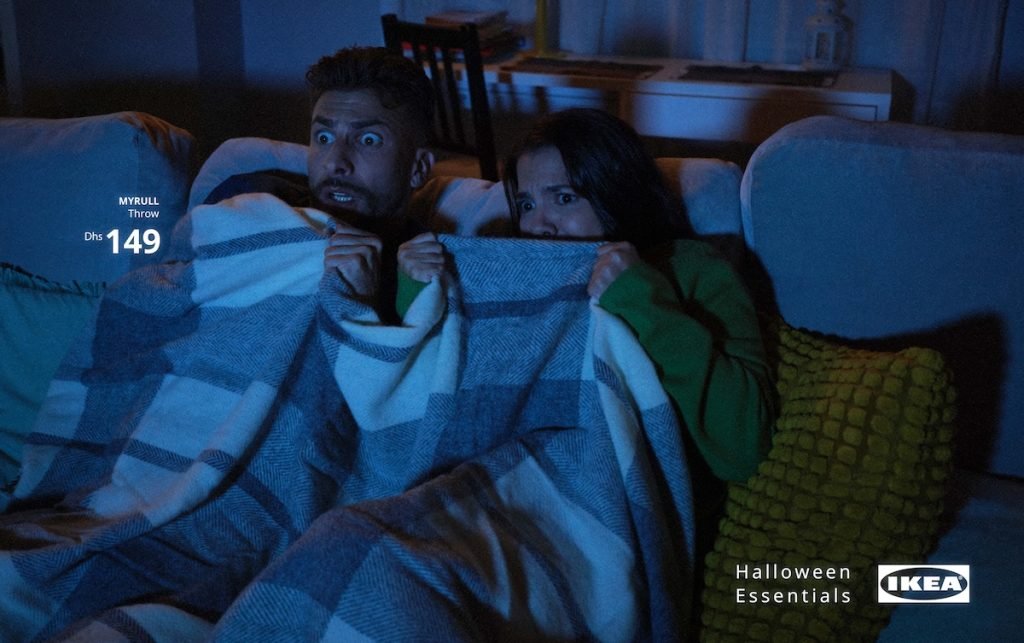
2. IKEA—Halloween Essentials: Turning Everyday Items into Fear Fighters
IKEA did what it does best, which is to find creativity in ordinary things, while most other brands focused on jump scares and eerie imagery.
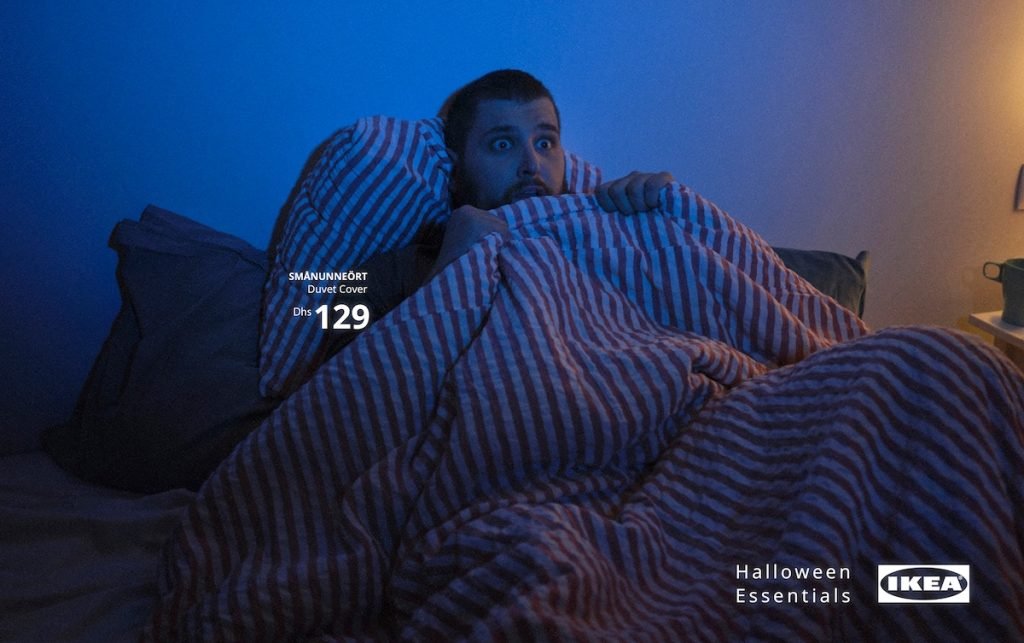
By highlighting a straightforward, universal truth—when horror films get intense, we all grab a cushion—IKEA turned the Halloween narrative this year.
How They Told the Story:
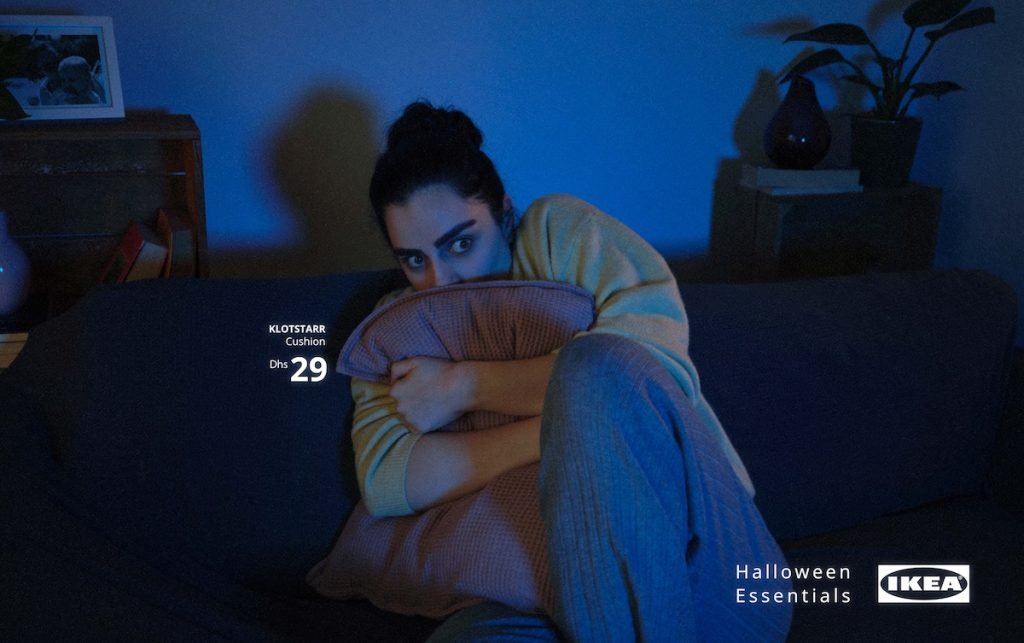
A dimly lit living room, a jump scare on screen, and a figure holding an IKEA cushion like a shield were among the simple yet moving visuals.
Not a ghost. No blood. Simple human behavior transformed into effective seasonal advertising.
The International Touch:
The campaign, which was distributed throughout MENA via TV, print, and outdoor, struck a universal chord. That automatic “hide behind the blanket” moment could be relatable to everyone, everywhere.
The Reason It Worked:
- Based on real human insight rather than tricks.
- IKEA’s brand promise of meeting daily needs was reaffirmed.
- Offered a novel interpretation of Halloween devoid of cobwebs and fake blood.
IKEA demonstrated that sometimes the most impactful Halloween tales are about moments rather than monsters.
A perfect reminder that even during Halloween, empathy can be your strongest marketing tool.
Love brand nostalgia? Check out Coke Wants You to Wait for Halftime—But Pepsi Says, Why Wait?
3. Six Flags—Come Out and Play
When most brands dropped quick, catchy ads this Halloween, Six Flags did something unexpected—it made a movie.
This year, the theme park chain transformed its Halloween campaign into an eight-minute horror film shot inside one of its own parks.
Instead of flashy promos or quick thrills, it gave audiences a cinematic experience that blurred the line between entertainment and advertising.
The Storyline:
The short film invited viewers to “come out and play”—a darkly thrilling invitation that took them on a nightmarish journey through the park.
Every ride, corridor, and scream was crafted to build tension, making viewers feel like they were inside the haunted attraction itself.
Why It Stood Out:
This wasn’t just another Halloween trailer—it was immersive storytelling.
By focusing on atmosphere, emotion, and visual craft, Six Flags proved that long-form content can be just as powerful (if not more) than a 30-second ad.
The Creative Win:
- It sold fear as fun—the perfect blend for an amusement park.
- It doubled as a movie and a marketing tool.
- It showcased the real Six Flags experience without a single sales pitch.
4. Gushers—”Fruithead”
Some brands play it safe for Halloween.
Gushers? They went full horror-comedy.
Reviving their iconic 1990s ads, Gushers took a nostalgic twist and turned it into one of the most talked-about Halloween campaigns of the year.
The short film “Fruithead” reimagined the story of the kid whose head turned into a fruit… but this time, as an adult, haunted by his own past.
The plot:
Years later, the same child is still being tormented and wants to exact revenge on the director of the first advertisement.
The outcome?
Directed by Mike Diva and starring Bradley Whitford, it’s a darkly humorous film that combines a strong sense of nostalgia with eerie humor.
The Reason It Worked:
- It transformed brand history into a treasure trove of narrative.
- It struck a natural, unforced balance between humor and horror.
- Indeed, it caused viewers to cheer for a candy.
Gushers reminded marketers that sometimes their most creative assets are their previous campaigns by leveraging their quirky heritage.
5. Skittles—”Ghost Roommate”
With “Ghost Roommate,” a six-second micro-sitcom that combined humor, light horror, and normal roommate chaos, Skittles brought eerie fun to TikTok.
Made for Gen Z and mobile, each episode was like a quick laugh. Skittles spoke the language of social media instead of imposing a TV commercial.
Key Takeaway:
Shareability is more important than scares during Halloween. Skittles demonstrated how clever storytelling presented in a snackable format can be very successful on social media.
6. Columbia Sportswear—Shoppable Haunted Experience
Columbia transformed Halloween into an interactive shopping experience with their “Shoppable Haunted Experience.
Rather than a static campaign, what users found was themselves perversely invited to explore a virtual haunted house whose spooky rooms held some of Columbia’s latest outdoor gear—all clickable and instantly buyable.
It wasn’t just creepy—it was e-commerce rethought.
Takeaway:
Turning engagement into conversion with a mix of storytelling and shoppability. Columbia showed that fear can power sales, even in the fashion industry.
7. Yahoo: “The Most Haunted Search”
Yahoo put a spooky spin on its core product, search. For Halloween, it introduced “The Most Haunted Search,” an addition that offered spooky-themed search results, such as ghost stories, haunted destinations, and supernatural trivia.
It transformed a regular activity of the online world into an interactive adventure, proving that even in the heart of a search engine, you can capitalize on seasonal buzz with some creativity.
By mixing nostalgia, curiosity, and tech, Yahoo showed that relevance is always just one cool campaign away.
Wrapping Up the Spooky Season of Creativity
From the haunted searches to the ghostly roommates and nostalgic crossover, this Halloween showed that creativity has no bounds.
Both brands found a way to turn fear into fun, channeling spooky vibes into smart storytelling.
Marketing is not about selling a product; it’s about building an experience people want to be a part of.
Which means that as the ghosts recede and the candy is eaten, one axiom still remains true—ideas that spark, captivate, and surprise always prevail.
Read next: Have you heard about Instagram’s Gold Ring Award?
Leave a Reply